
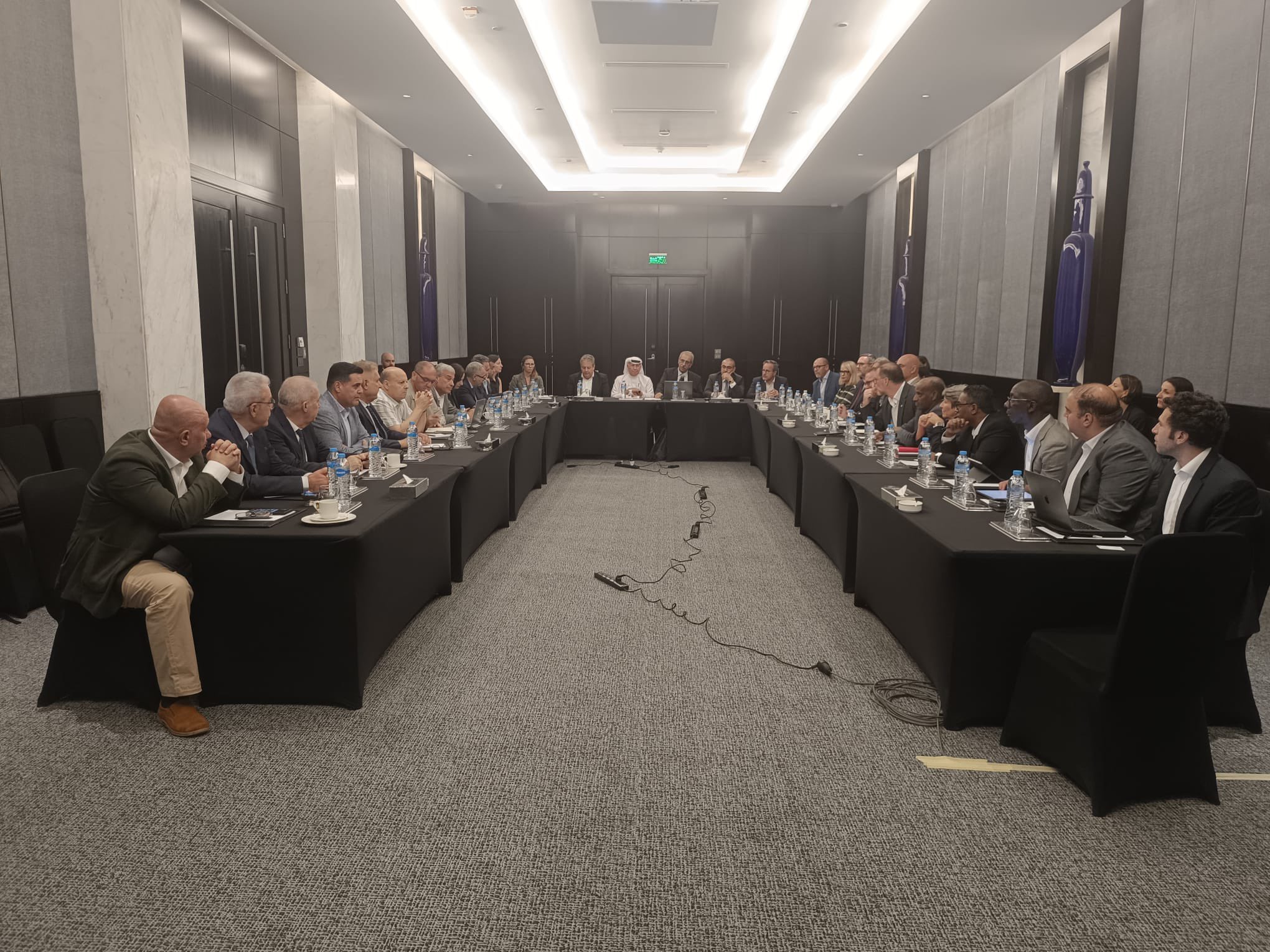
The National Committee for the Administration of Gaza (NCAG) and the United Nations agencies operating in Gaza convened a joint coordination meeting aimed to aligning the United Nations early recovery strategy with NCAG’s Gaza Recovery Program (GRP), identifying priority interventions, and arranging joint working mechanisms to ensure a comprehensive and effective response to the needs of all residents of the Gaza Strip.
The plenary session was co-chaired by Dr. Ramiz Alakbarov, Deputy Special Coordinator and Resident Coordinator at the Office of the United Nations Special Coordinator for the Middle East Peace Process (UNSCO), and Dr. Ali Shaath, Chief Commissioner of the National Committee for the Administration of Gaza. The joint chairmanship marks a significant step in operationalizing direct coordination between the United Nations Organizations and NCAG, strengthening the efforts in implementing and delivering relief, recovery, and reconstruction programs under the NCAG’s mandate.
The United Nations delegation comprised senior representatives from the World Food Program (WFP), the United Nations Children’s Fund (UNICEF), the World Health Organisation (WHO), the United Nations Development Program (UNDP), the International Organisation for Migration (IOM), the Office for the Coordination of Humanitarian Affairs (OCHA), the United Nations Office for Project Services (UNOPS). Also in attendance were representatives from the Office of the High Representative of the Board of Peace (OHR), the Tony Blair Institute for Global Change (TBI), and the Commissioners of the NCAG, all of whom took part in the event.
Following the plenary, a series of specialized parallel sessions were convened, addressing shelter, health, small and medium enterprises, solid waste management, water, sanitation and hygiene (WASH), governance, and cross-sectoral humanitarian coordination with a particular focus on food security and education. That reflects the NCAG’s operational readiness as the authority responsible for designing and implementing recovery and reconstruction programs in partnership with civil society and UN partner agencies, each contributing within its area of mandate in the service of the people of Gaza.
Participants affirmed the imperative of sustained and structured coordination between the United Nations and NCAG to deliver an effective response to the immediate and long-term needs of the people of Gaza, within the framework of the implementation of the roadmap in accordance with President Trump’s Comprehensive Peace Plan and United Nations Security Council Resolution 2803.